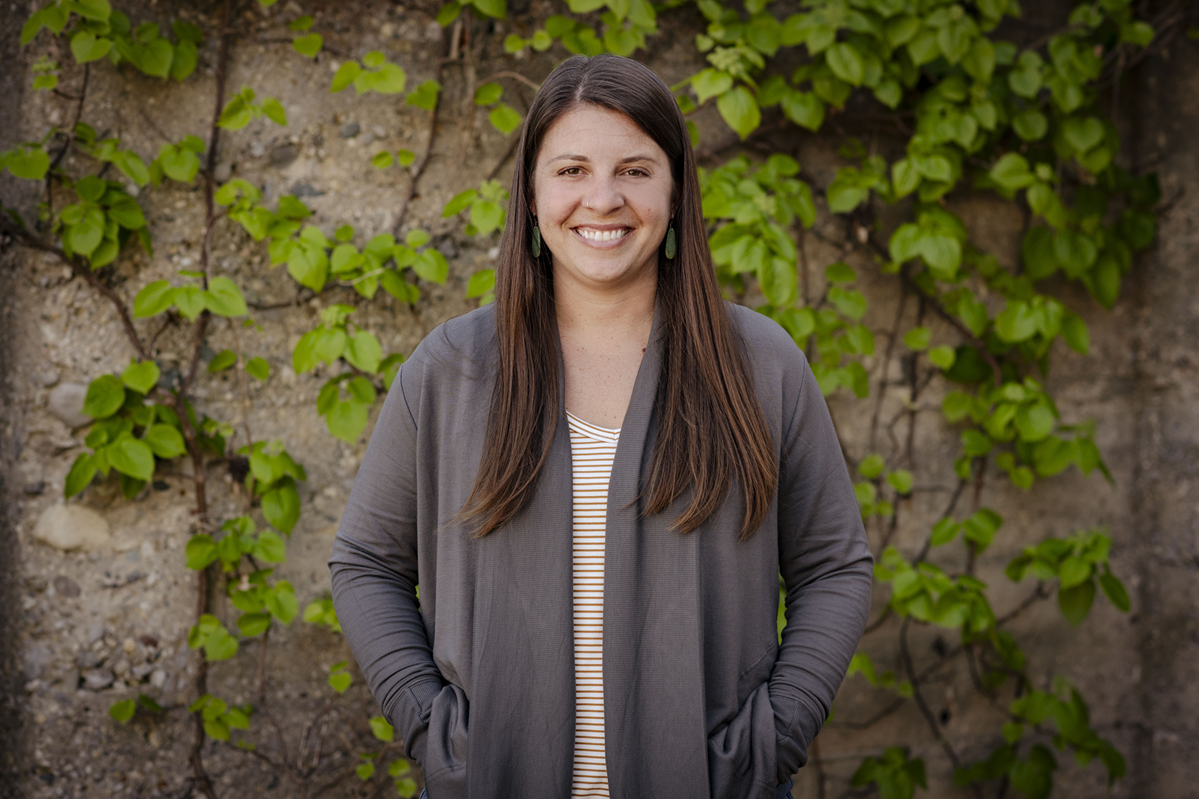
Empty Nest Reminder...Your Young Adult’s Success Isn’t Always Linear - Joanna Lilley - E119



Your young adult’s path may look messy, stalled, or off-script… and that doesn’t mean something is wrong.In this guest episode, we’re joined by Joanna Lilley, a therapeutic consultant who works with young adults and their parents during the often complicated transition into adulthood. Joanna helps families navigate college decisions, mental health challenges, academic setbacks, and those moments when forward motion feels unclear.We talk about the difference between being college capable and college ready, why gap years can be useful when they’re intentional, and how parents can respond when academic probation, burnout, or “I don’t think this is for me” conversations come up. Joanna also shares practical guidance on boundaries, communication, and how curiosity can be more productive than fear when things don’t go as planned.This conversation is for parents who need reassurance that progress doesn’t always look linear… and that detours can still lead somewhere meaningful.🎧 Joanna’s podcast, Success Is Subjective:https://www.successissubjective.org/🌐 Joanna’s consulting work and parent resources:https://lilleyconsulting.com/📖 Our upcoming book, The Loud Quiet - Love, Laughter and Life in the Empty Nest, is coming soon. You can find details and updates here:https://www.theloudquiet.com/p/bookCHAPTERS0:00 Intro1:07 College capable vs college ready4:10 When parents misread readiness7:32 Gap years and intentional pauses12:13 Academic probation and hard conversations16:44 Boundaries when kids stall out22:01 Failure to launch concerns27:01 Signs parents shouldn’t ignore30:43 How families find outside help34:10 Why nonlinear paths still work👋 Join the conversation in our community:https://www.facebook.com/groups/theloudquiet📬 Get new episodes and extras in your inbox:https://theloudquiet.kit.com/signupWant to be a guest on The Loud Quiet – Empty Nest Living?Send Rick and Clancy Denton a message on PodMatch:https://www.podmatch.com/hostdetailpreview/theloudquiethostDisclaimer: This podcast is for informational and entertainment purposes only. The views and opinions expressed are those of the hosts and guests and should not be taken as legal, financial, or professional advice. Always consult with a qualified attorney, financial advisor, or other professional regarding your specific situation. The opinions expressed by guests are solely theirs and do not necessarily represent the views or positions of the host(s).
Clancy Denton (00:00)
On today's episode of The Loud Quiet, Empty Nest reminder, your young adult success isn't always linear. Hey guys, welcome back to another episode of The Loud Quiet. We are so excited about this episode. Before we jump into it, we do want to let y'all know that our book is coming out early 2026. We finalized the cover this week, which is really exciting.
And you can see a sneak peek of that at our website, theloudquiet.com. So head on over there and take a look, let us know what you think. We're excited about it. ⁓ know, thinking about doing this book, we've been working on this since last, February, I would say. That is a marker of success, I would say, for us. But what about your kiddos?
What, you know, their path to adult success isn't always cookie cutter or a straight line in spite of society and culture wanting everyone to follow the same path. What's out there? What do they need? What do parents need to know?
Rick Denton (01:07)
Yeah, and those are such important questions that we are so excited that our guest today, Joanna Lilly, is going to help answer those today. Through her consulting practice, Joanna focuses on working with young adults, typically ranged in the 18 to 29 years old, who are experiencing those challenges relating to things like college, mental health, and transitions into adulthood. With a master's degree in counseling, Joanna acts as this buffer between parents and their children.
helping young adults navigate the resources and make decisions about their education and future plans. Joanna, welcome to The Loud Quiet.
Joanna Lilley (01:46)
Thanks for having me.
Clancy Denton (01:47)
Yeah, we're so excited because I know we have so many listeners that have kids in all different arenas, stages, everything that, you know, they may not have chosen to just go to college or...
Rick Denton (02:03)
Our
friend group proves that there is not a linear path.
Clancy Denton (02:06)
We have so, yeah, yes, everyone is different. So you do have your masters in counseling, but you say you're not a therapist, you're not a coach, you're a consultant. So explain to us what those roles, how they differentiate.
Joanna Lilley (02:24)
Yeah, I mean, I think the important piece to know about the therapist component is that that is a lens that I use in the work and the meetings and kind of like just the information gathering with the young adults. So it's just like a baseline of education, not doing any therapy, just trying to explore it. The same kind of goes for a coach. I actually worked as a college coach for a long time and I loved it and I was very action oriented and forward focused.
I think the cool thing about being a consultant is that I get to be kind of this like bridge. It is where you are now in that transition. I want to help you get there, but I'm not going to be in the weeds with you on doing the day-to-day coaching or making sure you're doing the things. But instead I actually just get to walk alongside you. And when I say you, I'm talking about the young adult. I'm walking alongside you navigating what it is that we need to explore to kind of figure it out.
But if you need a coach, right, once you get where you're going, I wanna help match make you with the right coach. Or if you need a therapist at any point in process, I wanna help make that process a lot easier. So this consultant hat that I wear is really just being the bridge of helping getting you from where you are now to where you wanna go or help you figure out where it is that we're going.
Rick Denton (03:44)
Yeah, one of the phrases that you used, I think really kind of fits with that consultant style, is it almost feels like there's no assumption. Like a consultant, I used to be a business consultant, and so a consultant goes in and makes no assumptions. They're there to ask questions, to understand. And there's a phrase that you had shared with us when we were talking earlier, that there's college capable and there's college ready. What's the difference between college capable and college ready?
Joanna Lilley (04:14)
The simplest way to describe it is that college capable is somebody who got the ACT scores or the SAT scores that they needed. They had the grades. They took the AP classes. They basically checked all of those boxes that from a kind of metric standpoint, like you are college bound. You are academically at a level and have that kind of sophistication to be able to land in our classroom.
Now, what we know about college is that it's not just about being a student, even though obviously that's what optional higher education is, right? You're going there because you're choosing to learn more. But college is about the experience, the social connections, establishing routines, the opportunity to, from an identity development standpoint, figure out who you want to be. You're finally at a point, hopefully, where you are exploring
your own path based on the values and the education that you receive from the family in which that raised you. So readiness is kind of this all-encompassing way of saying, do you have the ability to handle rejection? Do you have the ability to hustle when you need it? Do you have the insight or self-awareness of when you're struggling that you are struggling?
Who do I ask? What do I do to fix this problem? And then once you have that information, do you have the ability to then implement it? I mean, it's basically everything outside of, you take a standardized test? Or can you complete some homework? ⁓
Clancy Denton (05:50)
No, I love that because we had one child that was college capable and college ready. The other one was college capable, but I had some fears about her going so far away. They both wanted to go away where they knew no one so they could interact with new people, but she is very much an extroverted introvert.
And so I was really concerned that when she got there, if she did not meet her people very quickly, it was not going to be a good thing. And she obviously proved us wrong. But yes, I really, with Tanner, I did not have those fears at all. But with Tegan, you know, I did.
Rick Denton (06:35)
It is interesting that you bring that up because I think that's a great example of we weren't sure that she was college ready and we were flat out wrong and I think that proves that perhaps parents may not have the best radar when it comes to assessing college ready because our biggest barometer that we use is college capable and we assume and your explanation Joanna kind of clarifies college capable no no college ready and as parents we may kind of not be the best at assessing it.
Clancy Denton (07:03)
Yeah, and I think a lot of parents probably unknowingly put that pressure on their child that, you know, the child probably feels like, I'm supposed to go to college because I'm supposed to go to college. That's just what I'm supposed to do. But, you know, this idea of the gap year has come about. I mean, it was a pretty, you know, it was talked about a lot. remember just probably in the past, what, 10, 15 years.
Rick Denton (07:32)
yes, compared to when we were going to school, gap year was something that was kind of like, ooh, you're taking a gap year, but now it's more common. ⁓
Clancy Denton (07:39)
So
tell us about that. What are your views on the gap year and how do you think it can be beneficial or detrimental to some kids? Because I'm sure it can be either.
Joanna Lilley (07:50)
First and foremost, it's really important for me to share that there is a ⁓ level of hypocrisy with the information that comes out of my mouth because I was a...
Literally, I turned 18 like three days before I went to college. So I myself was very immature and I had my own experience that actually is like very comparable to some of the students I work with, but I had the ability to work through it. There's a difference there. I went to college. I had no idea what I was doing. I thought I had an idea and it just did not pan out and I had way too much fun, like not focusing on academics. And so, ⁓
I share this because if I reflect on my own experience, if the topic of a gap year had been presented, I'm not sure I would have pursued it, but I do see now, ⁓ obviously after the fact, how that would have been tremendously, it would have been an opportunity for me to grow up and get really dialed on what it was that I wanted to do so that I didn't have that rocky academic experience right out of the gate. Now I say that gap years are not for everybody, and I need to be really clear in
and making sure that we, whoever's listening to this also understands the distinction of when we're talking about gap year, what we're not talking about is the like old school model of like somebody who's going off to Europe and backpacking and like just like completely off the grid. Like that certainly exists, but that's like a 1%. What we're talking about is an intentional experience after high school. So we can call it a gap year or we could just call it what's your plan. ⁓
Would I suggest it? Do I recommend it to everybody? I think I could strongly encourage it to a lot of people, especially now that we're kind of in this post-COVID era, where folks really had pivotal delays in their academic and social-emotional growth. so now more than ever, we've got academic burnout or disinterest in education. Yet we're at this crossroad saying,
but you have to apply for colleges. You got to get in somewhere. it's just like, but nobody's really taken the moment to say, hey, maybe taking a break from school just to figure out what you want to do, to work a job, to volunteer at a place, to like learn a skill. That right now I think could be more impactful for everybody.
And so again, I'm saying this, like I'm a little biased because I want to recommend it and yet it's hypocritical because when I reflect on my own experience, like what I have said, yes, that's a great idea. I don't think so. You know, so and we're also dealing with the factor too of parents who are still, yes, there's there's more buzz around considering gap year programs, but we're still we're leap years, I think, in.
We're behind where we need to be in terms of accepting not going to college immediately after high school as a collective society.
Rick Denton (10:57)
I totally agree. there's the conversation around going into the trades, conversation going into military or other service. you and I were talking about Prof. G. Scott Galloway recently has been talking a lot about how he wished there was more of a national mandatory service component in between a high school year and a university experience. realize that certainly as Americans, we kind of chafe at anything that has the word mandatory, but that idea of allowing people to mature.
allowing people to be exposed to folks that are different than the ones they grew up in in their community and just get a lot more of those life skills before they head to whatever that next stage is would be interesting to explore.
Clancy Denton (11:36)
Well, that and you know, it seems like now these kids are graduating from college so fast because they come in with so many credits, you know, some are getting out before they even turn 21 and then they can't go to the happy hours with their business partners because they're not even 21. So the idea of a gap year in that scenario to me would be, know, just give them a little bit more time to grow up before
And I get it, a lot of it is financial based, that they're trying to do it as quickly as they can, but yeah, it's, you know.
Rick Denton (12:13)
Well, so Joanna, you told a story of maybe not being quite as ready for school as you might wish to have been. Well, sometimes that can result in outcomes like academic probation or even cases where a kid looks at their parents and says, I want to drop out of college altogether. So how should parents and adult children handle those moments?
Joanna Lilley (12:38)
Well, first things first. So for academic probation, it happens. It's really common. I mean, I think way more common than people realize too. And a lot of it has to do with like a lack of shifting from a high school academic mindset to what like you have to do differently in college, right? Every professor is different, whether or not they're accepting late assignments. Are you getting, you know, like tallied for attendance?
But if you don't take the time to read the syllabus to understand the things, then you're going to really just like, again, continue on that train with I'm going to do school the same way I did in high school because it worked then. But that's where you see a lot of young adults that all of a sudden are experiencing, oh my gosh, I just failed my first assignment ever, right? Or my first exam. But guess what? That exam was 50 % of my grade. And I have no way of actually being able to like pass or whatever the case may be. We're in the weeds. But academic.
Probation, common. The important thing for parents to understand is if you ask your child, hey, what's the plan for the spring? Especially right now, as this comes out, it's like, make sure you trust, but you verify. So if your kid says, yeah, I passed all my classes, great. If you're a parent and you're paying, you trust them and you still need to verify that that's actually accurate. Then if there is any concern, like, you are on academic probation, every school is also different. There are some universities that say,
First semester, if you get below a 2.0, we're suspending you from the university. Not every school does that, but there are some. If they're not asked to leave, if they're able to return, but the university's like slapping their hand like, hey, you gotta get it together. As a parent, it's important for you to also make sure that your young adult has a clear plan. Again, when I hear messages where it's like, yeah, I'm just gonna study differently, or I'm just gonna make sure I go to class, it's like, okay, the kicker in what I'm really hearing is you are failing to plan.
And thus, now we are going to fail. And so it's important to just like make sure that we have a really solid idea of what's going to be done differently. And oftentimes that needs to look like exploring what's on campus for supports, but more importantly, what's off campus for supports, like an academic coach or some sort of like mentor, somebody that can be essentially a buffer to make sure that the student is in fact doing the things that they need to do, but they're not a parent and they also don't
work for the university. It's beneficial to know that because whoever works for the school is just limited to like helping students in the moment. And sometimes they're kind of strapped. Now, beyond that, going back to the second part, if your student wants to leave school, then we say, what do you want to do? Right? It's important. I think this is where I see a lot of parental fears spike because you're like, my gosh, are you going to be successful? Right? That's really what it comes down to. Like any of these fears are
is my child going to be okay? Right? Are they going to have a positive, happy, successful future? But what we're getting at is we need to honor their request. Hey, college is not for me. Or hey, this college is not for me. Okay, I hear you. Get curious parents. Don't ask why, because why comes across a little bit judgmentally. The question can actually be, okay, tell me more. What are you envisioning that you're going to do?
since you're going to or if you leave this school. What's the plan? How do you expect us to support you? Right? So you're really still engaged in the dialogue. You're gathering information. Like I said, you're getting curious. You want to support but you're also like that that provides you an opportunity essentially to like withhold the fear and panic that may be bubbling up for you as
as a parent like, oh my gosh, does this mean you're moving back in with us? Does this mean that you're never going to move out? Does this mean you'll never get a college degree? Those are the fears that drive a lot of that, like what can feel like emotional flooding. Pause, take a breath, get curious, ask what's your plan instead.
Clancy Denton (16:44)
So how do you, okay, being in your consulting business, if, you do, work with the child, but then I'm assuming you also have some bridge with the parents as well. How, if the child comes to their parents and says, okay, I don't want to go back to college or starting off, they're like, college is not for me. How do you help bridge that?
communication between the parents and the child or where do you step in and what steps do you help them take?
Joanna Lilley (17:18)
Yeah, I think the interesting thing about the way that I work is that although I do have interactions with the parent, it's minimal. I will say that. And it's important because if I'm spending more time with both, then I unfortunately don't have the clear line for rapport and trust with the young adult. And sometimes there's a need for someone, in fact, I get it all the time where young adults will be like, hey, I'm happy to fill out this young adult intake form.
Can you just make sure, you reassure me that you're not going to talk with my parents about anything unless I've specifically named it? Absolutely, right? Even though I'm not their therapist, I'm still treating them and their information with confidentiality, but they do know that I have some touch points with parents. Now, if parents need more coaching or direction, then that's what I'll also recommend parents to resources. But the piece in all this, and again, that's going back to the bridge, right?
The young adult is the primary family member that I'm working with for the moment. If it becomes clear as I'm working with them that like, hey, the family could all benefit from different resources, then I'll also start to do some legwork or research for the family. The biggest piece that I find most helpful is that there are like subgroups or parent communities that exist, like virtual and like place-based in more metropolitan areas.
But if it is some sort of essentially like a non-judgmental closed parent support group of parents of college aged or young adults, then there is some sense of relief that can be found knowing that you are not alone. The whole reason why I created the Success is Subjective podcast, if you're the type of parent that's like, parent support groups, not for me, but I'll listen to some podcasts, I'll binge some podcasts hard.
That's why I created the podcast that I did because I wanted to have individual stories of people just talking about, hey, here's what I did, right? Here's how I had this conversation with my parent. Here's what ended up playing out. Look at my life now. So it's a kind of like an anonymous way to seek normalcy and validation that like as a parent, your kid will be okay.
Clancy Denton (19:32)
So do you find that you're having the kids reach out to you or the parents reach out to you for who?
Joanna Lilley (19:41)
I will say it's a growing trend and I'm like, I'm all about it. I'm getting more young adults that are finding me directly, which is like fantastic because then that means for me, like I've got somebody who's all in. They've done research, they found me, they've like read about me and they're like, you, you can help me figure out what I, what I need to do, which is awesome. It's normally the parents. And some of that is again, driven by fear, like, Hey, my child is leaving the university or Hey, we tried to get them there. within
literally 24 hours, we had a complete meltdown and had to withdraw them from school and now we're frantic, what do we do? Where do we go? And so parents are driving it and just like for like simplicity sake, I refer to the parents as my customer and I refer to the young adult as the client.
Clancy Denton (20:28)
Okay.
Rick Denton (20:29)
Yeah, I like that. and Joanna, thank you for sharing that about your podcast. Folks, if you're listening, if you're watching, just scroll down in the show notes, hit the link, start following Joanna's podcast. You'll get some phenomenal information. She's had some great guests on there, as we can attest. And it's a great thing for you to start listening to and following if this is of interest to you.
Clancy Denton (20:49)
I did want to say something because what you just talked about, you know, getting there 24 hours and then saying, okay, this is not for me because we had a similar experience with our daughter that I really thought she was going to say, I don't want to do this. Like literally the day that we unpacked her dorm and got everything set and we were headed to dinner and she just started crying in the back seat. And I was like, my gosh, my gosh. I...
told Rick later that night, I said, I really thought she was going to say, I can't do this. When we were in school, I don't ever remember anything like that.
Rick Denton (21:28)
No, my parents tell the story that I called them while they were driving back.
Joanna Lilley (21:32)
From Duke.
Rick Denton (21:34)
that in their first hotel room I said, don't know that I made the right choice.
Clancy Denton (21:39)
But did they, but did they let you do it? No. No. I feel like now. No.
Rick Denton (21:44)
Of course not, like, well, that's shame,
Clancy Denton (21:47)
Good luck. Cause I don't remember any of that.
Rick Denton (21:49)
Long distance is expensive. couldn't have a long conversation.
Clancy Denton (21:52)
But that, you know, I see that all the time now on like the mom groups that I'm on, you know, it just...
Rick Denton (22:01)
Well, let's take that for a second. We're talking about kind of college launch elements, academic probation, those sorts of things. But you've seen failure to launch, for lack of a better term, in a wide range of areas. What should families do? How should they get started when they are starting to sense that the young adult is just simply not launching in a way and thriving in the way that they know they could be?
Joanna Lilley (22:27)
There's a couple of ways that I will tackle this because I think what we're there on one hand, most of it's reactive, right? Like we're seeing the signs right now and like, what do we do? And then there's also an opportunity to be more proactive, which Clancy, I think it kind of goes back to your like, you know, the gut feeling that you had for Teagan, right? Like, hey, she's college capable, but like, I'm not sure she's college ready.
So there's a proactive approach for parents that can actually, so if you're a parent of even like an adolescent right now, who, you we're already thinking about empty nesting in the future, but we're still in the trenches for now, like that's actually a perfect opportunity to start planting the seed of how to individuate yourself from your child so that they're not so dependent on you. And I'm not saying that your daughter was, so let me be clear in saying that. What I'm getting at is I see a lot of young people
And it's not specific to a gender that are more dependent on their parents than ever. So like the long, the runway is a lot longer than it used to be. Whereas like at 18, you know, even back in like the early 2000s, it was like, we went to college. When you went to college, you went to college. Like you didn't hear about the stories of people that were there for 24 hours and like started to melt down and said, no, no, no, take me home. That just like didn't happen. That's also, I think like,
Play space, there were still phones in like the dorm rooms. So like, again, just like feels like a lifetime ago. ⁓ That said, the reactive piece in all of this is as a parent, if you're starting to panic, like the stuckness, if you notice the stuckness or you can see on the horizon that this is not going to course correct on its own, then take action then to get some supports for yourself. Because the difference is it's kind of twofold, right?
You do as a parent want to see your young adult show up, right? They need to get a job. They need to like go out on dates. Like there are things that we want them to do and then there are things that they actually need to do, right? They need to wake up. They need to like be responsible. They need to be accountable. They need to like take, again, take steps towards some level of autonomy and self-sufficiency. If they're not doing that, then this is where it's like, we need to assess what is in our control.
which comes down to, again, where like, okay, I work with the young adults, I'm helping them, but if the parents actually put up parameters and some of those parameters come into place when they've had some coaching support for them, how do I even put the parameters up? And what I mean by that, another synonymous word that people use are boundaries. Hey, if you're gonna live with us, we do expect you to work a job. If you're not working a job,
then we're gonna need to actually come up with kind of an exit strategy because the only way that you can cohabitate with us is if you are doing X, Y, Z, right? And as a parent, even though they're over the age of 18, I get this all the time where parents don't feel like they are empowered. I've lost control, they're over 18, they could do what they want and it's like, yeah, but let's pause for a second and take a step back. You pay the mortgage? You pay for food?
Are you paying for their car insurance and the car and their phone? And like the list can go on. So it's like all of a sudden it's like we need to be reminded that you do have leverage to help support them. But there's also a really distinct line where it's like, I don't want you to be managing or overly involved, but you do need to be really clear and communicative in what it is that you're expecting your child to do. If they cannot do it, then that's where you're also suggesting to them.
Like bring somebody in, have somebody help you. And that's usually where I, again, that's where in Search Joanna, I become this neutral party of like, well, let's figure it out. What do you want to do?
Rick Denton (26:13)
The description that you're talking about boundaries or expectations and that you know, had a former guest back in December episode Dr. Robin talked a lot about that So if you're listening to this and want to get even more information about some of that Dr. Robin talks about that if you're watching on YouTube Click that card right there and you'll be taken back to that episode as well
Clancy Denton (26:32)
So you've said that a lot of parents, know, or the kid, contact you after, you know, they're already past the, or in the crisis, deep in the crisis. Especially like if your kids are away at college, they're not, you're not with them every day. Are there some signs that parents can be aware of that, you know, okay, maybe things aren't going like they should be going?
Joanna Lilley (27:01)
Yeah, I think it's less about the signs themselves, and sometimes it's more about the frequency or the duration. So I get on one end of the spectrum, I'll tell a a parent might describe the situation of like, hey, my child literally is texting or calling me hundreds of times a day. And it's like, OK, did you put a boundary up there?
hey, I'm only gonna be available on these days at this time. Like I wanna be here for you, but like here's an opportunity to say, you also gotta lean on somebody else, right? This is a life skill. Who else are you seeking out for support in this moment? I cannot be the person that emotionally, mentally, and physically is like holding the weight for you. ⁓ If then they don't respond to the boundary and it's still showing up, that's where it's like.
Okay, there's an opportunity for us to potentially consider some sort of like intervention. And when I say that, I'm not like, don't picture the like Hollywoodized scene. What I'm saying is just like an opportunity to have an intentional conversation, which is intervening on the behavior. And then on the other side of that spectrum too, if you have a normally like
communicative child that has gone radio silent and you are concerned, also trust your whatever your like spidey sense is telling you in this moment, please pay attention to that. Cause that's also, you know, and there's so many factors that go into that too. If there's a history of mental health, even more of a concern, things to think about. For parents that I have that are like really fearful of something impulsively happening or just like not having the ability to have any say.
or involvement in anything when they're in college, especially if they're out of state studying somewhere else or living in a different state, doesn't have to be college connected. ⁓ There are advanced directives that families can seek out. That's always like, that to me actually does not have to be reactive. It often comes down to like an after crisis plan. Like, all right, now this time around we're gonna put together this advanced directive.
But more so for some parents that are working with like first time out of home, if you're going as a student or just like living somewhere else, put that together because it just gives you peace of mind of like, if my kid's in a car accident or if there's some sort of like situation when they're in a medical environment, like you have the ability to speak with providers. I can't tell you how many times a year I get a call from a parent that is,
beside themselves that they cannot speak with a doctor when their child is like in some sort of medical situation. It's like, yeah, that's called HIPAA.
Clancy Denton (29:47)
And
that's not very well known. No! That should be part of the college application. I know, we knew. But so many of our friends did not. And I was like, oh yeah, you need to get, for sure, get their paperwork, take them to your lawyer and get everything settled.
Rick Denton (30:03)
And I even just there said it should be part of the college application. But to the point that we're talking about, life isn't linear. So it's something to be aware of. Now, I need to stop down here and say this is not a legal, this is not a financial, this is not a formal advice. Please seek the advice of actual lawyers for this kind of thing. It's a good reminder though that exactly that. Go seek the professional counsel that is needed. Well, let's talk about that. If a family gets to that point that they're realizing, hey, I need...
outside help. I need the help of a consultant. I know that I would struggle to get started. How should a family just simply get started if they realize I need help in this area?
Joanna Lilley (30:43)
The hardest part in all of this is that a lot of people don't know that people like me exist unless it's like ⁓ a complete crisis. And it's often only because in this moment of like panic and vulnerability, they've disclosed their situation and somebody knows somebody. Which is like, if I had some way like to wave a magic wand and like let more folks know that people like me exist,
I would absolutely wave that wand hard. The reality is, I think it's just a matter of knowing who you work with before and trusting them and then asking the questions. I think the biggest piece in all of this too is that, and I kind of hit on it, families often don't reach out until it's at a more heightened state. If we can get ahead of that, let's be more proactive. So if your child is working with a therapist,
Ask the therapist, who would you recommend? If you've got a pediatrician or if you've got a friend that you play golf with, ask them. Who are you working with? Because it really is this network and it's mostly relational. And until more parents are asking the questions and knowing what questions to ask, it's going to be hard to find the right people.
Clancy Denton (32:00)
Well, this is a perfect time for you. Plug yourself and your podcast. Tell our listeners where they can find you, where they can listen to your podcast.
Joanna Lilley (32:09)
You can find the podcast, it's called Success is Subjective on any podcast playing platform, which is a tongue twister. Or you can just land on the successissubjective.org website. It's literally a landing place for the podcast. You can find me on lillieconsulting.com. My last name is spelled L-I-L-L-E-Y, so it's Lily with an E. I created my website with the like...
college parent in mind where I just did a complete brain dump of everything that parents could possibly want. And right now, most of it's in written form.
Clancy Denton (32:45)
I read it the other day. I was reading through it and I was like, is really good. There's a lot of good information out there.
Joanna Lilley (32:54)
They're short reads, they're digestible, and it really is like any possible thing that you can think of related to a young adult, anything transition related, you can find that information on the website. But the website also just shows how to connect with me if you're curious. And those first conversations are always complimentary, because I don't know if I'm going to be a fit for everybody.
Clancy Denton (33:17)
you told us you work with a small like you're very focused on the clients that you have at a time so it's not like you just have tons of free no you're very focused on the ones that you do take on
Joanna Lilley (33:32)
Exactly. Cap my caseload at 12 max at a time. And even though, like I said, the customer, right, the parent is contacting me first, the second complimentary call actually, and I call it almost like a chemistry call, is with the young adult. So once that conversation is had, it's kind of two way. Does it feel like there's a connection in the sense of like support and vulnerability and trust, not assuming that it's guaranteed right out of the gate, but can it be built over time?
because I'm going to be asking a lot of questions to get to know you. so again, it's just an opportunity to gauge the readiness, the willingness, and the fit.
Rick Denton (34:10)
I know that in this conversation, I had my eyes opened a couple of times in unexpected ways. love when you said, you know, why questions can actually feel a little accusatory. I'd never thought of it that way. I thought it was an open and exploratory question. The idea of college capable versus college ready and the simple thought that not every path is linear is so refreshing and eye opening and validating to a lot of folks.
that are listening and kind of living this stage of life. So I really appreciate you coming on here. This has been fantastic. Joanna, thank you for being on The Loud Quiet.
Joanna Lilley (34:48)
Thanks for having me.